Cricket · Border–Gavaskar Trophy, 2020–21
How a team bowled out for 36 crossed four Tests and a continent to break the one fortress that does not fall
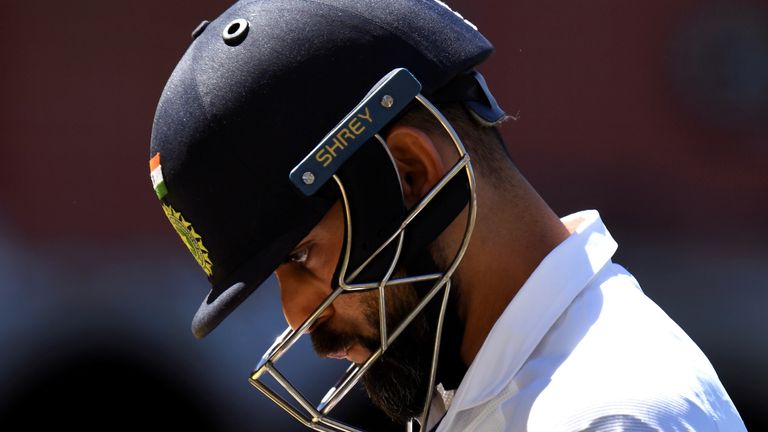
Today marks five years since the miracle at Brisbane. On 19 January 2021, an Indian side stripped down to net bowlers and debutants beat Australia at the one ground that had not lost a Test since 1988. Five years on, it is still the best place to start an explanation of what this team is capable of, and it starts not at the Gabba but seven hundred miles south, in Adelaide, with a number that should have ended the series before it began.
There is a number in Indian cricket that does not need a sentence built around it. Say it to a certain kind of grown man and watch him look at his shoes.
Thirty-six.
It came on the third morning of the summer’s first Test, the nineteenth of December 2020, under the pink wash of the Adelaide dusk, and it took about as long as a lunch break. India had spent two and a half days building a house on that ground: a first-innings lead, eight second-innings wickets standing, a match and a series within reach. Then the whole thing came down in a single session, the way a sandcastle goes, not grain by grain but all at once, when the tide finally reaches the wall. Eight wickets for twenty-two runs. Josh Hazlewood took five for eight. Pat Cummins took four for twenty-one. The last man walked off holding a broken arm. Mayank Agarwal top-scored. He made nine.
Cricket is a sport that advertises its uncertainty, and for once the entire commentariat agreed. The verdict was filed before the players had finished showering, and it was unanimous: this was over.
Michael Vaughan, England’s former captain and one of the game’s loudest voices on Twitter, put a number on it that same evening:
“Told ya … India are going to get hammered in the Test Series … #AUSvIND #4-0”
He was not a lone voice. He was the loud one in a very large choir.
None of them could have known it that night. What they were saying would have sounded, a month later, like the raving of a fool. The number 36 was not the end of anything. It was the first line.
The number 36 was not the end of anything.
It was the first line.
Chapter 1: Adelaide
India had landed in Australia as one of the best teams alive. They were deep in fast bowling for the first time in their history, and they were led by Virat Kohli, a man who batted as though the opposition’s very presence were a personal affront, and who had spent a decade teaching Indian cricketers a thing their fathers had never quite believed: that they were allowed to be the aggressor in someone else’s country. They had won here two years before, the first Indian side ever to take a series on Australian soil. They had come back to do it again, and for two and a half days nothing argued otherwise.
The first Test was a day-night affair, played with the pink ball that turns docile in daylight and venomous under lights. India bowled Australia out for 191. Kohli made a flowing 74. They built their lead and woke on the third morning with the game cupped in their hands.
Then they dropped it. On a surface that had stopped offering anything to anyone, Hazlewood and Cummins found a length that was not so much unplayable as inevitable, the ball leaving the bat’s edge before the bat had finished deciding what to do. Wickets fell in threes, then in twos, then one at a time because there was almost no one left to lose. Mohammed Shami had his forearm broken by Cummins and walked off cradling it like something that had stopped belonging to him, and the innings was over: thirty-six all out, the lowest total in India’s long history and among the lowest anyone had managed in a century and a half of the game. Australia knocked off the runs for the loss of two wickets. Behind the stumps Tim Paine had held seven catches, and he wore the calm of a man at a coronation rather than a contest.
There was no asterisk to stand behind, and that was the cruelty of it. India’s best players had lost on a fair pitch to a good attack, on the worst morning of their working lives. Then the morning got worse. Kohli, who had been granted leave to fly home for the birth of his first child (a decision wholly his own, which not one soul begrudged), boarded a plane the next day. The team that stayed behind was a body that had lost its head and snapped its bowling arm in the same week, one down with three to play, ten thousand miles from anyone who loved it.
In a dressing room gone the particular quiet of men with no language for what had just happened, the one who would now captain the ruin found the only words worth saying. They were almost insultingly small against the size of the thing.
Ajinkya Rahane, to his dressing room, Adelaide:
“It was forty-five minutes of bad cricket. It does not define us.”
No oratory, no promise of glory. Just a flat refusal to accept the verdict the scoreboard was trying to hand him.
1st Test · Adelaide Oval
Australia 191 & 93/2
India 244 & 36
Australia won by 8 wickets
Chapter 2: Melbourne
The Melbourne Cricket Ground is a hundred thousand seats of concrete that can make a crowd’s disapproval feel like weather. Walking into it on Boxing Day, eight days after thirty-six and without your captain or your strike bowler, was to present yourself for a second execution before the largest audience the game can gather. Every law of gravity in cricket said India would lose this match and the series behind it. Vaughan had already done the maths for them.
Rahane, soft of voice and easy to underrate, answered with something quieter and far more dangerous than defiance. He handed a Test cap to a willowy twenty-one-year-old opener named Shubman Gill. He recalled the all-rounder Ravindra Jadeja. And he gave the new ball to a young quick off the Hyderabad maidans, Mohammed Siraj, whose father had died only weeks before: a man who had driven an auto-rickshaw through that city for years, carrying strangers to their doors so that his son might one day chase a game for a living. Siraj was already in Australia, sealed in quarantine, when the news came. He could not fly home to bury his father, could not stand at the grave. He chose to stay. He chose, in effect, to grieve by bowling, and he carried that weight to the last day of the tour without once being seen to put it down.
On the field the patched-together side did not roar. It tightened, the way a fist does. Bumrah and the debutant Siraj squeezed Australia out for 195. Then Rahane walked to the middle and played the innings that gave the whole month its spine: an unhurried hundred and twelve, runs taken in singles and clips and tucks, a captain leading not by speech but by the obstinate refusal to get out.
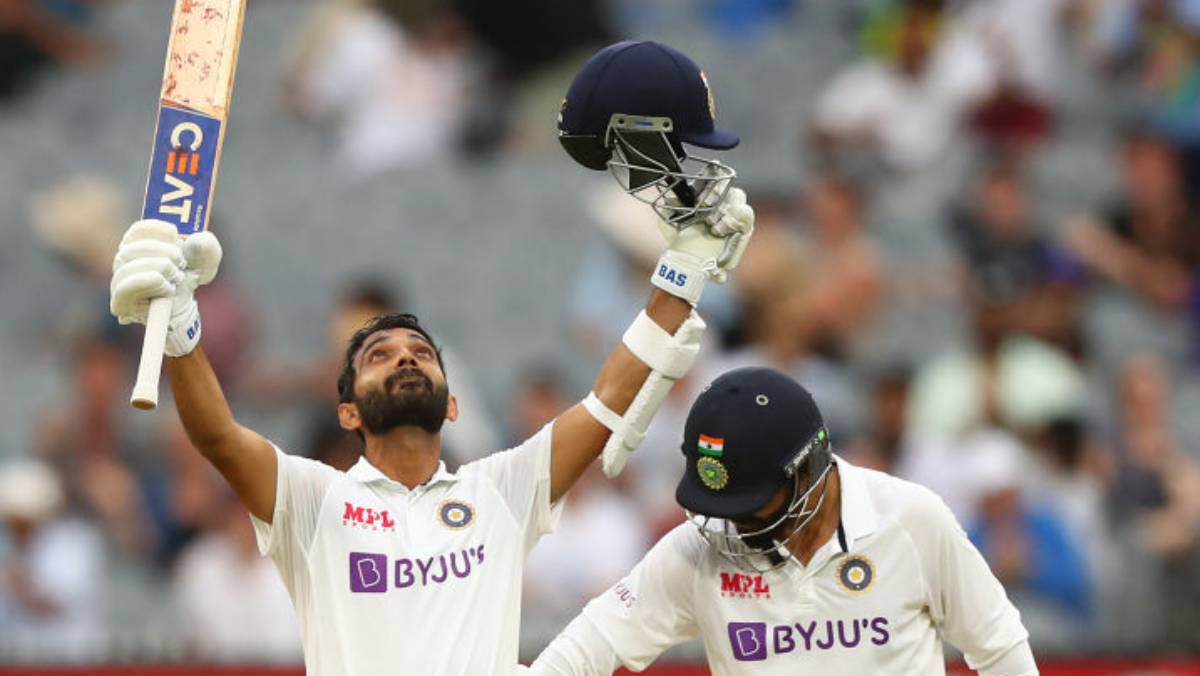
He batted for hours and never once resembled a man chasing history. He resembled a man rebuilding a house, brick on brick, on the very plot where it had fallen down. At the other end Gill made a fearless 45 and announced himself the way the truly gifted do, without raising his voice.
India won by eight wickets. The series was level. The thirty-six was still there in the record book, and always would be, but it had been answered.
2nd Test · Melbourne Cricket Ground
Australia 195 & 200
India 326 & 70/2
India won by 8 wickets
Chapter 3: Sydney
Melbourne had tested India’s nerve. Sydney went looking for something deeper, and harder to give: their appetite for pain.
The third Test offered no road to victory, only the narrow track of survival. Set a preposterous 407, India would have to bat out the best part of two days on a fifth-day pitch against the finest attack on earth. The arithmetic did not favour a draw. It barely conceded one was legal.
The day began with two innings of real beauty. Rishabh Pant, the young wicketkeeper who plays on pure instinct, counter-attacked to a thrilling 97, treating the scoreboard like a door he meant to kick down rather than a wall to hide behind. Cheteshwar Pujara, his opposite in every register, built a monk’s 77 and let the clock argue his case for him. But both fell with hours still to be survived, and only the wounded and the tail left to survive them.
Somewhere in that long afternoon, with India clinging on, the home side let its confidence show its teeth. Behind the stumps Tim Paine, who had dropped Pant three times in the same innings (a generosity the scorebook would not forget), began chirping at Ravichandran Ashwin through the grille of his helmet. The stump microphone caught all of it.
Tim Paine, stump mic, day five, SCG:
“I can’t wait to get you to the Gabba, Ash.”
Ashwin, who has never in his life been the first to run out of words, offered a forecast of his own.
R. Ashwin, in reply:
“Just like we want to get you to India, that will be your last series.”
The exchange would age badly, but that was later. For now it hung in the Sydney heat, a fortress captain promising a touring side a reckoning at the one ground where reckonings were guaranteed.
What followed has gone into the game’s scripture. Hanuma Vihari tore a hamstring in the middle of his innings (the muscle went like wet rope) and could no longer run a single without risking collapse. So he set himself the hardest task the sport contains, which is to do nothing at all: to plant himself at the crease, subtract himself from the scoring, and simply decline, ball after ball, to leave. At the other end stood Ashwin, batting on a back so seized that, by his own account, he could not pick up his own children or lie flat in his bed that night. Australia smelled the blood and kept going to the short ball, the way a boxer keeps returning to a cut. Ashwin took blow after blow on the body. Vihari, rooted to his spot, absorbed everything they could throw. Together the two broken men batted out forty-two overs for sixty-two runs: a stand counted not in runs per over but in overs endured, the slowest and most heroic arithmetic the game knows. Vihari finished 23 not out from 161 deliveries. Ashwin made 39 from 128. The match was drawn. India had not won. They had refused to fall, and in those circumstances that was the larger feat.
Sydney carried a shadow no honest account should wash away. From one corner of the crowd came racist abuse, aimed at Siraj and Bumrah, serious enough that Siraj reported it to the umpires and the offending spectators were marched out of the ground. That a young man already carrying his father’s death had to stand at the fence and take that, then turn and run in again, says more about the spine of this side than any scorecard. India had been injured, abused, provoked, and outnumbered in fit bodies. They were still level. And Paine, it turned out, would get his wish. They would all see him at the Gabba.
3rd Test · Sydney Cricket Ground
Australia 338 & 312/6 dec
India 244 & 334/5
Match drawn
Chapter 4: Brisbane
By the eve of the fourth Test the team-sheet had stopped reading like a line-up and started reading like a ward round. Kohli was at home with his newborn. Shami’s arm had broken at Adelaide. Umesh Yadav had broken down at Melbourne. Jadeja had fractured his thumb at Sydney. Vihari’s hamstring was gone. Ashwin’s back had locked solid. On the very morning of the match the last two columns of the temple came down: Jasprit Bumrah, the best fast bowler in the world, was ruled out with an abdominal strain, and Ashwin, the man Paine could not wait to see at the Gabba, was declared unfit to play the very Test the taunt had named. In thirty-one days India had been relieved, limb by limb, of very nearly an entire first-choice eleven.
Consider the attack they sent into the most feared ground in the sport. Mohammed Siraj, two Tests old, was now the most experienced quick in the side. Behind him stood Shardul Thakur, who had bowled ten deliveries in his only previous Test before pulling up lame; Navdeep Saini, on debut; T. Natarajan, a left-armer from a village near Salem who had been flown to Australia purely to bowl in the nets and would now make his Test debut in a series decider; and Washington Sundar, an off-spinning all-rounder, also brought along to feed the nets, also winning his first cap. Between the lot of them they had played fewer Tests than a single ordinary career.
And the Gabba was not just any ground. The locals called it the Gabbatoir, and the name had been paid for in full. Australia had not lost a Test there since 1988, an unbeaten run older than most of the men India had brought to end it. A generation of touring sides had walked in at full strength and been led out beaten. India would try to break the streak with debutants, net bowlers, and strapping tape.
Australia made 369, and the makeshift attack bowled with a control its inexperience had no right to. Then came the first of the match’s improbabilities, from the bottom of the order. With the top order subdued and a heavy deficit opening up, the seventh wicket brought together two men picked to bowl, Sundar on debut and Thakur in his second Test, and they batted as though nobody had shown them the team-sheet, adding 123, Sundar making 62 and Thakur 67, hauling India to 336 and shrinking a yawning gap to thirty-three. The water-carriers had saved the innings with the bat.
Then Siraj took the second innings in his hands. The young man who had buried a father from eleven thousand miles away, who had stood at the fence and swallowed abuse and kept running in, tore the Australians apart for five wickets for 73, the first five-wicket haul of his life.
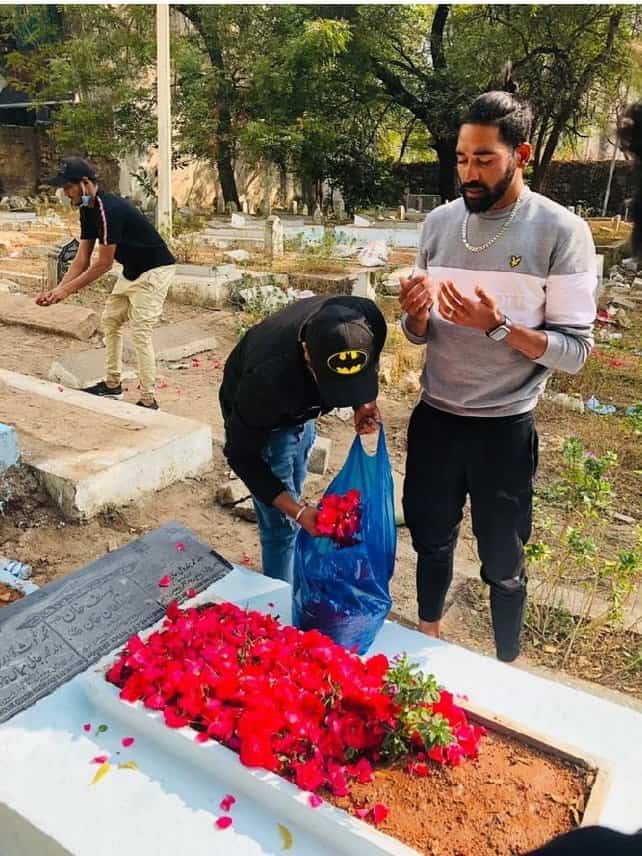
When the last of them fell he turned his face up to the Brisbane sky and held it there, eyes wet, for a man watching from somewhere other than the stands. Australia were gone for 294, and the target was set: 328, on the final day, on a worn pitch, at the one ground in the world that does not lose. The highest successful chase in its ninety-year history was 236. India would have to better it just to survive the day with a win.
They set out to make it look like nothing at all. Gill, twenty-one years old and seven Tests into his life, batted with the freedom of a man no one had thought to frighten, driving and pulling his way to a luminous 91. At the other end Pujara did the unglamorous work that makes such days possible: he offered his body as a breakwater and let the sea break on it.
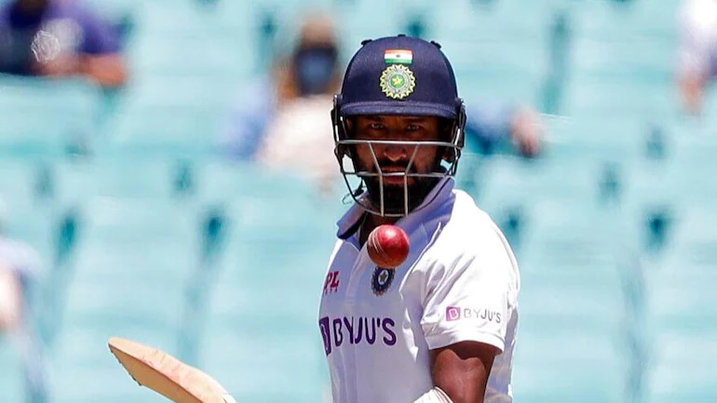
Australia went short again and again, and Pujara took it on the gloves, the ribs, the grille of the helmet, struck at least half a dozen times, declining to flinch, refusing to give back the minutes his partners needed.
Cheteshwar Pujara, on taking the blows:
“You can punch me as long as you can. Then I’ll punch back. That is how I planned it.”
His 56 took an age and cost him a fortnight of bruises, and it was worth every run of a century.
The ending belonged to Pant. The same Pant who had counter-attacked at Sydney, who had been sledged and mocked the length of the tour, who bats as though caution were a language nobody had ever taught him, decided India had not come this far to settle for the safety of a draw. He went after it. With three runs wanted he steered the ball away and set off, so fast that he later admitted he forgot the non-striker had a torn groin.
Rishabh Pant, recalling the winning runs:
“I told Saini, ‘3, not 2 but 3.’ His groin injury slipped my mind, I was running fast. While running the second run I noticed the fielder wasn’t even chasing it. Then I was filled with joy. I was shouting, ‘Saini 3, we have to run 3!’ Saini was running on one leg. It was fun.”
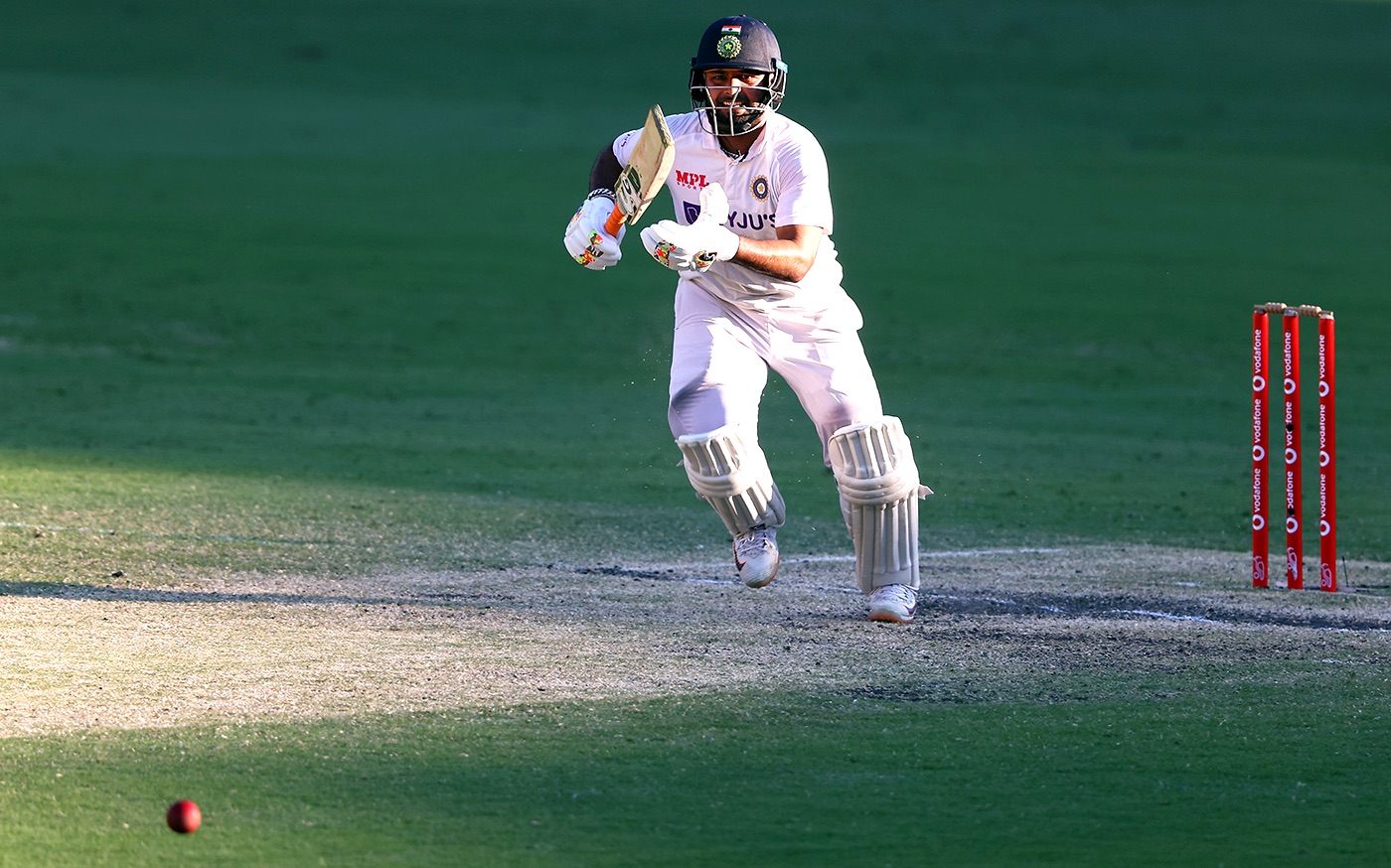
He finished 89 not out. India had made 329 for seven, chased down 328, won by three wickets, and taken the series two to one.
The Gabbatoir had fallen. Thirty-two years undone in an afternoon, by a team that on paper did not exist. They had seen Paine at the Gabba, exactly as promised. It was only the result that had been entered wrongly. Ashwin, the man the taunt had named, watched it from the dressing room because his body had finally quit.
Thirty-two years undone in an afternoon,
by a team that on paper did not exist.
In the riot of the dressing room, Rohit Sharma found Pant first.
Rohit Sharma, to Rishabh Pant:
“You don’t know what you have done. When you leave cricket, you will realise what you have done.”
Pant kept a souvenir. “I plucked a stump,” he said later. “That, and a picture of us doing the victory lap with me carrying the flag. It was the icing on the cake for me.”
4th Test · The Gabba
Australia 369 & 294
India 336 & 329/7
India won by 3 wickets · series won 2–1
Epilogue: The way back
Set the records down first, because the records are part of the meaning. India became the first side in thirty-two years to win a Test at the Gabba, and they did it by completing the highest successful run chase the ground had ever seen. They won a series in Australia for only the second time in their history, the first by a team taken to pieces by injury: without Kohli for three Tests, without Shami, Bumrah, Ashwin, Jadeja, Umesh and Vihari at one point or another, fielding debutants who had been flown out to bowl in the nets and a pace attack with barely a Test between them. They did it after being bowled out for thirty-six.
When it was done, the coach found the words the moment deserved.
Ravi Shastri, in the dressing room, hoarse and shining-eyed:
“Today, forget India. The whole world will stand up and salute you.”
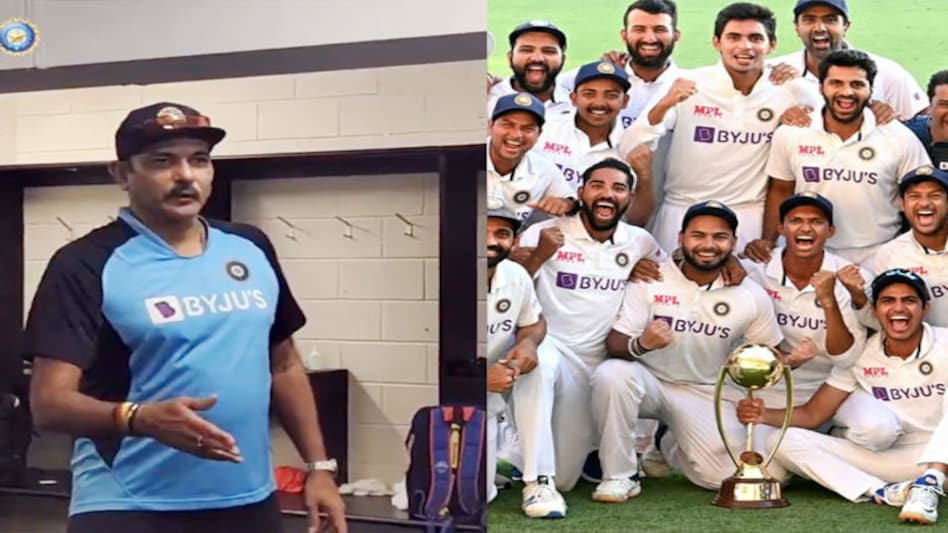
It was their spirit, he said, that had broken Australia’s back. He was reaching for the only explanation that fit, because the talent ledger did not. The distance from Adelaide to Brisbane was thirty-one days, and the strangest, truest thing about the journey is that the men did not change across it. Several of the bowlers who dismantled Australia at the Gabba had been carrying the drinks at Adelaide. Nobody acquired a new gift in a month. What they did, over and over, was turn up for the next ball and refuse to accept the verdict the scoreboard kept trying to deliver: Vihari standing on one leg for three hours, Pujara choosing to be hit rather than step away, Siraj turning grief into five wickets, Pant deciding a draw would be an insult to the distance they had walked.
The same Vaughan who had buried India in a tweet now dug himself out of one, posting on the night of the win, quoting his own words back at himself before the internet could.
Michael Vaughan, 19 January 2021:
“Told you all India would lose 4-0 if they lost in Adelaide…”
In The Telegraph the next morning he was more candid still: “India looked shot after the Adelaide match, and with all the selection issues they had, even India’s most one-eyed fans would not have predicted a comeback. Well, they have left me with egg on my face.”
None of it was written in advance, and it does the men a disservice to tell it as though it were. At every turn there was a reasonable road into defeat, well lit and easy to take, and at every turn somebody chose the other one. Sydney could have ended in the hour Vihari’s hamstring let go. Brisbane could have been surrendered to the comfort of the draw at tea on the last day. Neither of those things happened. A team got bowled out for thirty-six in front of the whole world, and a month later the same team walked into the one ground on earth that does not lose, and beat it.
The thirty-six is still in the book. Nothing will ever take it out. But thirty-two years on, it reads less like a collapse and more like a starting point.
Sources & quotes: Sky Sports: India all out for 36; The SportsRush: Vaughan’s 4-0 prediction and reversal; DNA: Vaughan “egg on my face”; India TV: Rahane century as captain; Wisden: Paine justifies the Gabba sledge; NewsBytes: Paine-Ashwin exchange; DNA: racism allegations at SCG; The Quint: Natarajan and Sundar debut, Ashwin and Bumrah out; Gulte: Siraj dedicates five-for to his late father; ESPNcricinfo: Siraj’s homecoming; Cricket Addictor: Pujara on the body blows; ESPNcricinfo: Pujara, “you can punch me”; Sportskeeda: “Saini 3, we have to run 3!”; The Cricket Monthly: inside India’s 2021 Gabba miracle, including Rohit Sharma’s words to Pant; Bookey: Pant on the souvenir stump; Business Today: Shastri’s dressing-room speech; Sportskeeda: highest successful chase at the Gabba; ESPNcricinfo: 4th Test scorecard, Brisbane; Wikipedia: Indian cricket team in Australia in 2020-21. Photographs are reproduced from the original publishers, credited above, for editorial commentary.